

The Coagh ambush remains one of the most significant military confrontations of The Troubles, marking a decisive moment in the long and bloody conflict between the Provisional IRA and British security forces. On June 3, 1991, a three-man unit of the Provisional IRA’s East Tyrone Brigade drove into the small village of Coagh, County Tyrone, unaware that they were heading straight into a meticulously planned SAS Coagh ambush. Within minutes, all three men were dead, and Northern Ireland would never view counterterror operations the same way again.
The Road to Coagh — A Country Torn by Conflict
To understand the Coagh ambush, one must first grasp the turmoil of Northern Ireland in the early 1990s. The region was engulfed in The Troubles, a violent, sectarian struggle between Irish republican paramilitaries, loyalist groups, and the British government. The IRA’s East Tyrone Brigade was among the most feared and active units, responsible for numerous attacks against police, soldiers, and political targets.
The British Army’s elite Special Air Service (SAS) had been conducting covert missions across Ulster, gaining intelligence and launching precision operations to disrupt IRA activities. The SAS Coagh ambush was not a spontaneous event—it was the culmination of months of surveillance, informant tips, and tactical planning.
The IRA’s Mission and the Rising SAS Intelligence Network
In the weeks before the Coagh ambush, British intelligence had intercepted communications suggesting that the IRA cell intended to assassinate a part-time member of the Ulster Defence Regiment (UDR) who lived near Coagh. Using ground informants and aerial reconnaissance, the SAS built a near-perfect picture of the unit’s patterns.
The IRA members—Tony Doris, Dermot McNally, and Eugene Kelly—were all experienced operatives. They were traveling in a red Vauxhall Cavalier armed with AKM rifles and explosives, ready for another mission. What they didn’t know was that every move they made had been watched for days. The SAS Coagh ambush was about to end their campaign.
The Morning of June 3, 1991 — Setting the Trap
As dawn broke over Coagh, the SAS established hidden observation posts around the village. Dressed in plain clothes and armed with automatic weapons, they waited in silence. Intelligence had pinpointed the exact time and route the IRA vehicle would take.
At approximately 7:00 a.m., the Vauxhall Cavalier appeared on the quiet street. The soldiers had been instructed to intercept only if the men posed an imminent threat. But when the vehicle slowed near a checkpoint area, the SAS feared a bomb detonation. The Coagh ambush began in a storm of gunfire that lasted less than a minute.
The SAS Coagh Ambush Unfolds
In seconds, the SAS Coagh ambush turned into a scene of chaos. The SAS unleashed over 100 rounds, striking the vehicle repeatedly and setting it ablaze. The IRA members were killed instantly; their weapons were later found inside the car, unfired.
Witnesses recalled hearing a “deafening roar” of gunfire that echoed across the village. Within moments, the quiet Coagh morning had transformed into a battlefield. The coagh ambush wasn’t just a tactical success—it was a psychological blow to the IRA, proving the SAS’s intelligence network was capable of pre-emptive precision strikes.
Aftermath: The Scene That Shook Northern Ireland
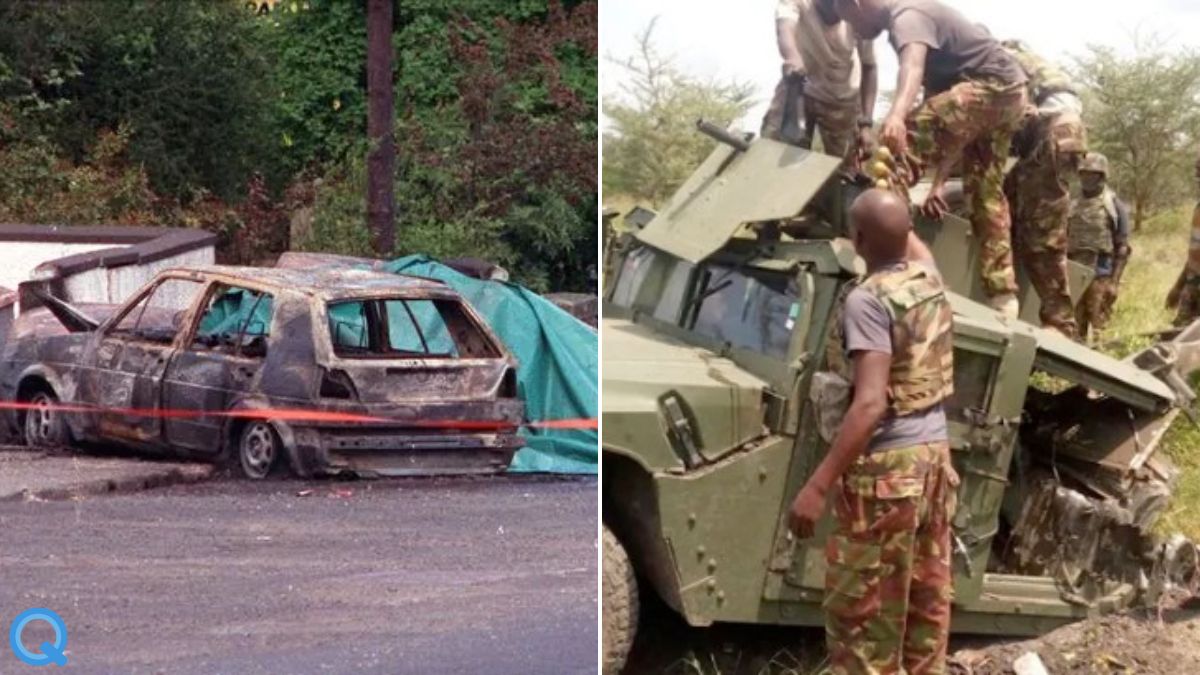
When local residents emerged from their homes, they were met with a harrowing sight. The car was reduced to a blackened shell, surrounded by armed soldiers and investigators. The Coagh ambush became instant headline news across Britain and Ireland.
British officials hailed it as a significant success in counterterrorism, while nationalist communities accused the government of conducting “shoot-to-kill” operations. Photographs of the scene, showing the burned-out car and bullet-riddled walls, became symbolic of the conflict’s brutal reality.
Public Reaction and Political Fallout
The SAS Coagh ambush sparked fierce debate. To unionists and many in the British government, it demonstrated the effectiveness of intelligence-led counterinsurgency. To republicans, it symbolized the ruthless nature of British policy in Northern Ireland.
Media coverage was relentless. Families of the deceased accused authorities of executing the men without warning, while officials maintained that the SAS acted in self-defense. The coagh ambush quickly became one of the most studied cases in modern British military history, raising questions about proportionality, ethics, and legality.
The Legal Inquiries and Controversies
Over the following years, numerous inquiries and investigations attempted to unravel the truth behind the Coagh ambush. The 2024 inquest ruled the killings “lawful,” concluding that the soldiers had an honest belief that lethal force was necessary to prevent imminent loss of life.
Critics argued that the inquest failed to fully explore the possibility of a premeditated shoot-to-kill strategy. Nevertheless, the SAS Coagh ambush remains a case study in the complexity of modern warfare and intelligence operations within democratic societies.
Legacy of the Coagh Ambush
More than three decades later, the Coagh ambush continues to influence discussions about counterinsurgency, intelligence ethics, and peacekeeping. It is often cited in military studies as a textbook example of how intelligence-driven missions can dismantle insurgent networks—at great moral and political cost.
The SAS Coagh ambush also marked a turning point in IRA operations. Following several high-profile losses, the organization shifted tactics toward political engagement, eventually contributing to the ceasefires that led to the Good Friday Agreement.
Lessons in Counterinsurgency and Strategy
From a strategic perspective, the Coagh ambush showcased the evolution of British counterterrorism. It reflected a shift from reactive defense to proactive disruption, where intelligence and surveillance played a larger role than brute force.
Military analysts note that the SAS Coagh ambush demonstrated the balance between tactical precision and ethical restraint—a balance that remains at the heart of every modern conflict involving asymmetric warfare.
The Human Cost Behind the Operation
Amid the tactical successes and political arguments, the human tragedy of the Coagh ambush cannot be ignored. Three young men lost their lives; families and communities were left divided by grief and anger. For many in Coagh, the echoes of that morning still linger.
The soldiers involved carried their own burdens, knowing that their actions, though lawful, left lasting scars. The coagh ambush reminds us that in war, even victories come with a human cost.
Reflection — Remembering the Coagh Ambush
The Coagh ambush stands as a grim chapter in Northern Ireland’s history—a moment that encapsulated the tension, courage, and tragedy of The Troubles. It was both a tactical victory and a moral dilemma, forcing a divided nation to confront uncomfortable questions about justice and survival.
Today, historians view the SAS Coagh ambush as a defining event that reshaped military engagement in conflict zones worldwide. It serves as a reminder that intelligence, courage, and restraint must coexist when peace is the ultimate goal.
Conclusion
The Coagh ambush remains a powerful symbol of a nation’s darkest chapter—where courage, secrecy, and tragedy converged. Beyond the gunfire and politics, it reveals the complexity of human choices made in times of war.
Whether viewed as a decisive military success or a tragic reminder of violence’s cost, the SAS Coagh ambush endures as a defining moment in the struggle for peace in Northern Ireland—a story that continues to resonate more than 30 years later.
