

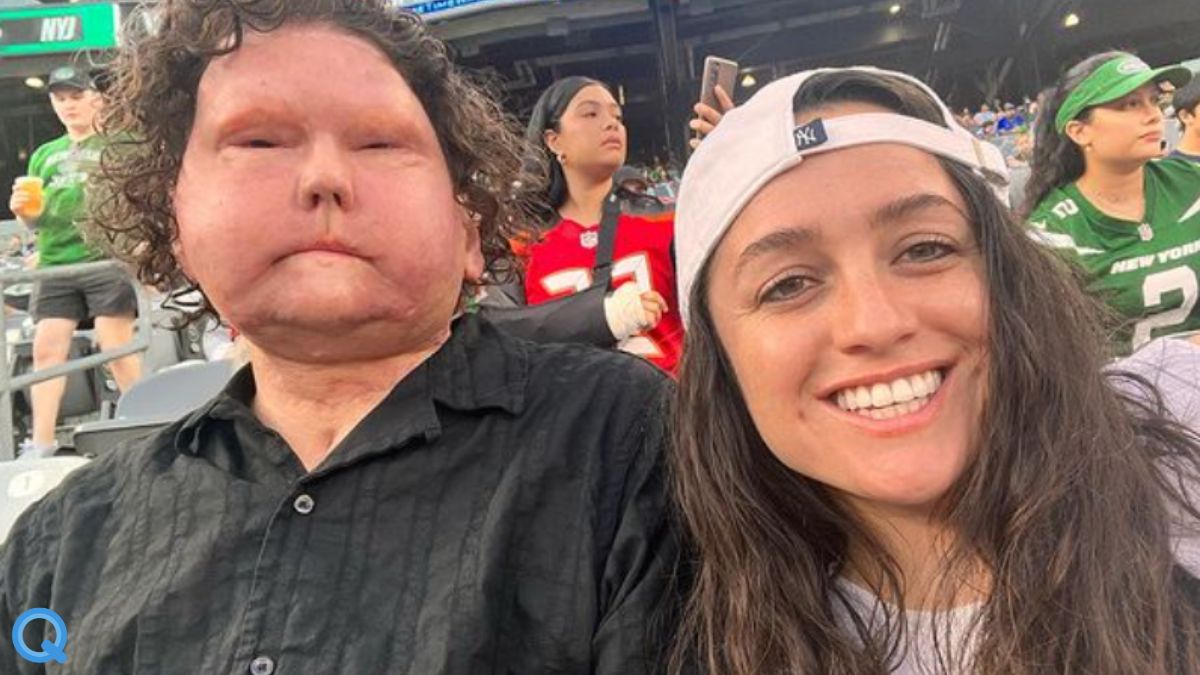
In modern medical history, few stories illustrate the convergence of human endurance and surgical innovation as powerfully as that of Joe DiMeo. His life changed in an instant, yet what followed reshaped not only his future but also the boundaries of reconstructive medicine. Through immense physical suffering, emotional reckoning, and unprecedented surgery, Joe DiMeo became the first person in the world to successfully undergo a combined face and double hand transplant.
This is not simply a story about survival. It is a story about identity, recovery, ethical generosity, and the long road back to independence after catastrophic trauma.
Who Joe DiMeo Was Before Everything Changed
Before the accident that altered his life, Joe DiMeo lived quietly in New Jersey. He worked long shifts, valued independence, and had the kind of routines common to many young adults building stability for the future. There was nothing extraordinary about his circumstances—no warning signs of the medical journey ahead.
That ordinariness matters. It underscores how abruptly life can fracture, and how trauma does not discriminate. Understanding Joe DiMeo before the accident provides essential context: he did not seek attention or adversity, yet he would later carry global attention with humility.
The Accident That Redefined His Life
In July 2018, after finishing a night shift, Joe DiMeo fell asleep while driving home. His car left the road, struck a curb, flipped, and ignited. Trapped inside the burning vehicle, he suffered catastrophic injuries before emergency responders could reach him.
The damage was extensive and life-threatening. He sustained third-degree burns across roughly 80 percent of his body. His face was severely burned, his eyelids and lips destroyed, and both hands rendered nonfunctional. He was placed into a medically induced coma, where he remained for months as doctors worked to stabilize him.
Survival itself was uncertain. Even after regaining consciousness, the extent of his injuries meant that conventional reconstructive surgery could not restore essential functions such as blinking, grasping, or facial movement. The accident left him alive—but without many of the physical tools needed for independent living.
Living With Severe Burns and Permanent Loss
Burn trauma is not only physically devastating; it imposes profound psychological strain. For Joe DiMeo, recovery initially meant repeated surgeries, skin grafts, infections, and constant pain management. His hands were unusable. His face could not protect his eyes. Eating, seeing, and performing basic tasks required assistance.
Equally challenging was the emotional toll. Severe burns often result in social isolation, loss of identity, and prolonged grief over one’s former self. Rehabilitation demanded patience measured in years rather than weeks.
At this stage, his medical team began exploring a possibility never before attempted at this scale: a combined face and bilateral hand transplant.
The Decision to Attempt an Unprecedented Transplant
Transplanting a face is already one of the most complex procedures in medicine. Adding both hands exponentially increased the risk. The surgery would require precise connection of bones, blood vessels, nerves, tendons, and muscles—all while managing the threat of immune rejection.
For Joe DiMeo, the decision was not about appearance. It was about function. Without eyelids, his eyes were constantly at risk. Without hands, independence was impossible. The potential benefits outweighed the risks, even though success had never been proven.
After extensive evaluations—medical, psychological, and ethical—he was approved for the procedure at NYU Langone Health.
The Surgery That Changed Medical History
In August 2020, Joe DiMeo underwent a surgery that lasted more than 23 hours and involved over 140 medical professionals. Surgeons transplanted a full face and both hands from a single donor, ensuring anatomical compatibility and vascular integrity.
The operation required:
- Microscopic reconnection of blood vessels
- Alignment of skeletal structures
- Nerve integration to enable future sensation and movement
- Coordinated timing to prevent tissue failure
When the surgery concluded, Joe DiMeo became the first person in the world to survive and retain a combined face and double hand transplant.
The Donor Behind the Miracle
No account of this achievement is complete without honoring the donor. A 47-year-old man, whose identity remains private, became the source of the face and hands that restored Joe DiMeo’s functionality. The donor’s family consented to a form of donation that required extraordinary compassion.
This decision carried emotional weight. Facial and hand donations are deeply personal, involving identity and expression. Their choice extended life beyond death in a way that profoundly altered another human being’s future.
Joe DiMeo has consistently acknowledged this gift with gratitude and respect, recognizing that his recovery is inseparable from their generosity.
Recovery: The Longest Phase of the Journey
Surgery marked a beginning, not an end. Recovery required intensive rehabilitation focused on retraining the brain to recognize new nerves and muscles. Movements that once occurred unconsciously—gripping, blinking, smiling—had to be relearned.
Physical therapy demanded repetition and patience. Nerve regeneration occurs slowly, often measured in millimeters per day. Sensation returned gradually. Strength followed later.
Emotionally, adaptation presented its own challenges. Accepting a new appearance, integrating transplanted limbs, and managing lifelong immunosuppression required resilience and mental discipline. Progress unfolded unevenly, but steadily.
Regaining Independence and Function
Over time, Joe DiMeo regained abilities that once seemed impossible. He could hold objects, perform daily tasks, and protect his eyes naturally. Facial expressions returned, allowing communication beyond words.
These milestones represented more than medical success. They restored autonomy, dignity, and self-confidence. Independence reduced reliance on caregivers and expanded his participation in everyday life.
Each regained function reinforced the purpose of the transplant—not as a cosmetic intervention, but as a restoration of essential human capability.
Life After the Transplant
Following recovery, Joe DiMeo chose to engage publicly with his experience. He began speaking about organ donation, trauma recovery, and the realities of life after severe burns. His openness helped demystify complex medical procedures and humanized the transplant process.
Rather than framing himself as a symbol, he focused on education and awareness. His presence offered reassurance to patients facing long recoveries and families navigating donation decisions.
This role was not imposed. It emerged organically as he rebuilt his life with intention.
Professional Life and Financial Stability
As his public role expanded, Joe DiMeo developed multiple income streams related to speaking engagements, advocacy partnerships, and media participation. While specific figures are not publicly verified, his financial stability reflects professional growth rather than celebrity status.
Discussions around Joe DiMeo net worth often miss the larger context. His work is driven by purpose, not profit. Financial sustainability supports independence, healthcare needs, and continued advocacy.
Why This Story Matters Beyond Medicine
Joe DiMeo’s experience reshaped medical possibility, but its broader value lies in what it reveals about resilience and ethical choice. It demonstrates:
- The potential of collaborative medical innovation
- The life-altering impact of organ and tissue donation
- The importance of long-term rehabilitation support
- The psychological complexity of trauma recovery
This story challenges assumptions about survival, disability, and identity. It reframes recovery as an evolving process rather than a singular event.
Conclusion
Joe DiMeo’s journey is not defined by a single moment, whether tragedy or triumph. It is defined by persistence across years of uncertainty, pain, and reconstruction. From the accident that nearly ended his life to a surgery that redefined global medicine, his experience stands as a testament to what becomes possible when human courage meets collective expertise.
The face and hands he carries are symbols—not of replacement, but of restoration. His life illustrates that recovery is not about returning to what was, but about building meaning from what remains.
FAQs
What injuries did Joe DiMeo sustain in the accident?
He suffered third-degree burns over most of his body, severe facial damage, and loss of hand function after being trapped in a burning vehicle.
Why was his transplant considered historic?
It was the first successful surgery combining a full face transplant with bilateral hand transplants in a single patient.
How long did recovery take after surgery?
Recovery has been ongoing for years, involving extensive physical therapy, nerve regeneration, and psychological adaptation.
Who donated the face and hands?
A single donor provided both, with consent from the donor’s family. Their identity remains private.
What does Joe DiMeo do today?
He focuses on advocacy, public education, and living independently while continuing long-term medical follow-up.
